
The short version: four of Quito's classic food markets sit within walking distance of our apartment in San Juan: Mercado Central (about 1.1 km, fried corvina and full almuerzo lunches for a few dollars), Mercado San Francisco (about 1 km, the closest to our door, with a famous row of herbal healers), Mercado Santa Clara (about 2.1 km, the cheap student lunch hall below the Universidad Central) and Mercado San Roque (about 1.2 km, the enormous wholesale market, which asks for some care). For souvenirs there is Mercado Artesanal La Mariscal, about 2.1 km north. Bring small bills, go in the morning, keep your bag in front of you, and remember that everything except the artisan market closes in the afternoon.
We live up the hill and buy our everyday fruit at the small Mercado San Juan in the neighborhood, but a proper market morning happens down at the classics. Each market gets its own section below, with the dishes worth the walk and the habits (cash, timing, bags) that keep a visit easy. Distances are approximate straight-line numbers from our door. Quito's hills add minutes, and the walk back up to San Juan is steep, so budget a couple of dollars for the taxi home.
| Market | Walk from our door | Go for | Hours |
|---|---|---|---|
| Mercado Central | ~1.1 km | Corvina frita, hornado, almuerzo lunches | Daily, mornings until mid-afternoon |
| Mercado San Francisco | ~1 km | The healers' row, locro de papa, fruit | Daily, mornings until mid-afternoon |
| Mercado Santa Clara | ~2.1 km | Caldo de gallina, juices, produce runs | Daily, mornings into the afternoon |
| Mercado San Roque | ~1.2 km | Wholesale scale, medicinal herbs (see notes) | Mornings; wholesale trucks arrive before dawn |
| Mercado Artesanal La Mariscal | ~2.1 km | Souvenirs: alpaca, tagua, silver, chocolate | Daily, roughly 9 am to 6 pm, often later |
Mercado Central: come hungry
Mercado Central is the lunch market: fried corvina, hornado and almuerzo set lunches for a few dollars, about 1.1 km from our door at the La Marín edge of the Old Town. Many of the stalls cook rather than sell groceries, which tells you what to come for.
The dish to order is corvina frita, fried sea bass, typically with rice and a small ceviche on the side. After that come the classics: hornado (slow-roasted pork with mote and potato patties), yaguarlocro (a potato soup with lamb offal and blood; ask what goes in it before you commit), seco de chivo, caldo de patas, and morocho, a thick, sweet corn drink with milk and cinnamon that pairs with empanadas. None of it is expensive. A full plate or a complete almuerzo (soup, a main with rice, a fresh juice) costs a few dollars, which is why locals treat the market as a canteen.
The juice stands deserve their own visit: made-to-order blends for roughly $1 to $1.50, including the mixes Quiteños drink against a late night or the first days of altitude. A few practical notes. Every table carries a jar of homemade ají; add it in small doses until you know the heat. The public toilet downstairs costs a few coins, so keep change. And the stalls open at breakfast and pack up by mid-afternoon, so this is a breakfast or lunch destination, never a dinner one.
Mercado San Francisco: the healers' market
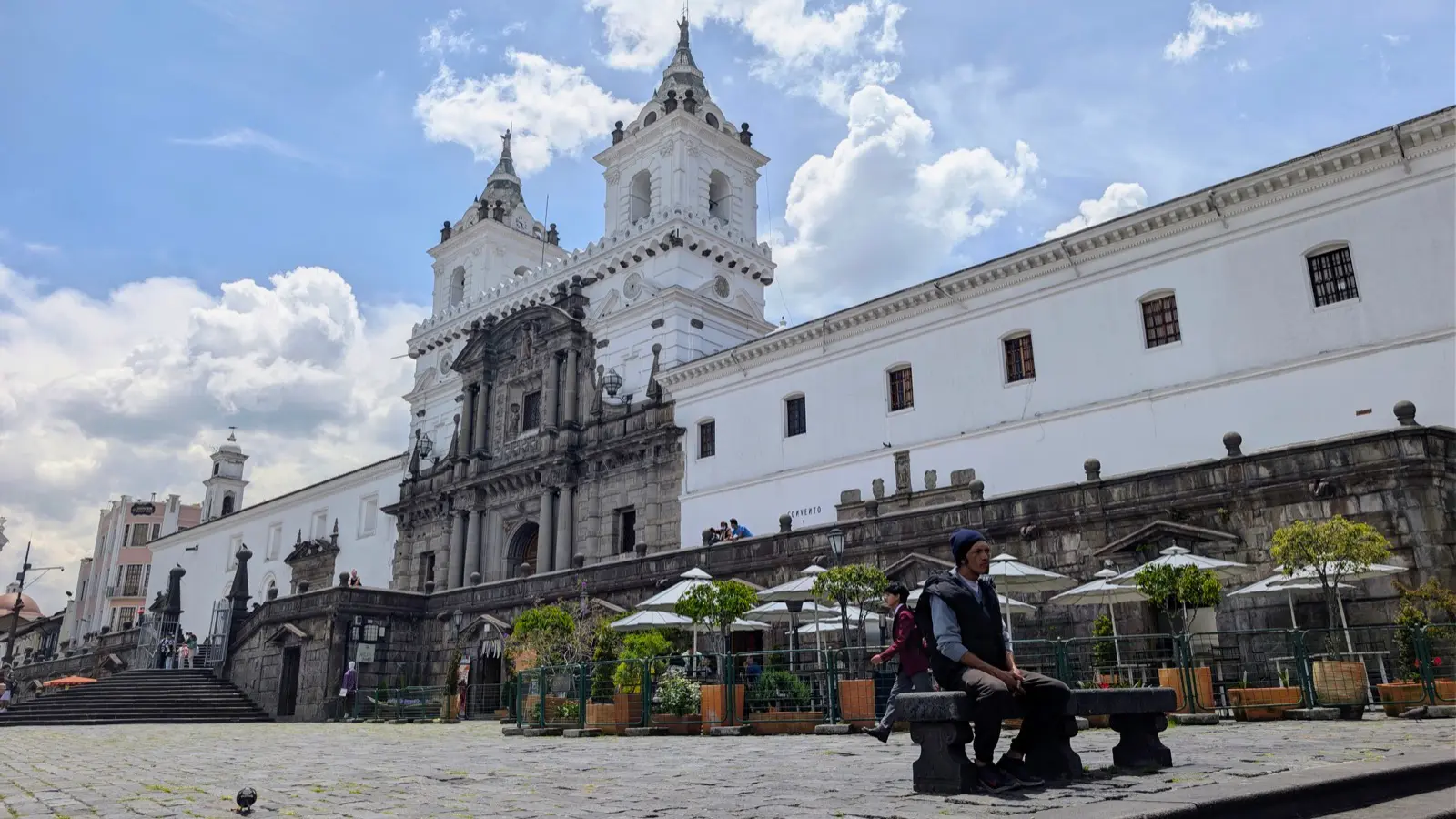
Mercado San Francisco is the closest classic to our door, about 1 km away and a few minutes from Plaza San Francisco. One of the oldest markets in the city, it pairs a normal food floor with something the others lack: a full row of traditional healers.
The reason to come, beyond the food, is that row of medicina natural stalls: herbalists, women whose knowledge has passed down through generations, selling bundles of herbs, flowers, colonias and incense against bad energy and for luck in love, money and business. They also perform limpias, short energy cleansings with a bundle of fresh herbs. If you want one, ask at a stall and agree the price before you start. It is a working tradition, not a show, so ask before you photograph anyone.
The food floor covers locro de papa (the Andean potato soup), ceviche, hornado and jugos de remedio, juice blends sold as cures, and the fruit stalls carry produce from every region of Ecuador. Stalls keep morning hours and wind down by mid-afternoon. If you only have one market morning in Quito, we point guests here: the healers' row plus a good lunch, and the Old Town starts right outside.
Mercado Santa Clara: where the students eat
Mercado Santa Clara is where the students eat: a two-story municipal market one street below the Universidad Central, about 2.1 km north of the apartment and the farthest of the food markets on this page.
The university next door keeps the food floor busy and the prices low. Typical orders are caldo de gallina, fritada, hornado, seco, fried corvina and, again, morocho with empanadas, next to a long list of fresh juices. Exact hours vary by source, so treat it as a morning-to-afternoon market and go before lunch.
If you are shopping to cook rather than to eat, this is the produce run. Sections range from produce, fruit and flowers to meat, seafood and medicinal herbs, plus pottery and baskets, and vendors often add a yapa, a small extra thrown in for free, when you buy a fair amount.
Mercado San Roque: the wholesale giant
San Roque is the biggest market in Quito and the one we do not send guests to by default, even though it sits only about 1.2 km from our door. It is a wholesale operation that feeds a large share of the city: trucks from the whole country unload before dawn, and by morning the lanes are packed. Many of the vendors are indigenous, and their traditions shape the market, most visibly in the herb and medicinal-plant section, which alone justifies the trip. Saturday is the busiest day.
A word on safety, because here it matters more than at the others. The market is extremely crowded, pickpockets work the lanes, and the streets around it are rough. If you go: daytime only, ideally a weekday morning. Take small cash in a front pocket and nothing else of value; no jewelry, no camera around the neck, phone stays in the pocket, backpack worn on your chest. Better still, go with a local guide who knows the aisles.
Our verdict as neighbors: if this is your first Quito market, start at San Francisco or Central instead; you get the same soups and herbs with far less to manage. If you already know Latin American markets and want to see the machinery that feeds a capital, San Roque on a weekday morning, ideally guided, is worth it.
Mercado Artesanal La Mariscal: the souvenir run
Mercado Artesanal La Mariscal is the souvenir stop, and the one market on this page that is not about food: close to 200 small shops with crafts from all over Ecuador. Alpaca blankets, ponchos, hats, silver jewelry, leather, tagua carvings, plus chocolate and coffee for the flight home. It sits in La Mariscal, a few blocks north of Parque El Ejido; from our place that is about 2.1 km, an easy taxi ride.
Bargaining is expected here; it is part of the visit, not an insult. On crafts, 25 to 50 percent below the first price is realistic: start low, move up slowly, and walk away and come back later if the number stalls. With fewer stalls than Otavalo, negotiating tends to be easier and often ends cheaper. It is also the only market on this page open past mid-afternoon, roughly 9 am to 6 pm daily and often later, so it works after a day of sightseeing.
If textiles are a main reason for your trip, the Saturday market in Otavalo, about 2 hours north, is the full version; our day trips guide covers how to do it.
Cash, timing and manners
Ecuador uses the US dollar, and at a market stall that means cash, period. Everything else that keeps a visit smooth fits in one list:
- Carry ones, fives and coins. Almost no stall can change a $20, and paying for a $1 juice with one creates a small crisis. Coins also cover the public bathrooms.
- Go in the morning. The produce is freshest, every stall is open, and the food floors run at full steam over lunch. Central and San Francisco wind down by mid-afternoon; in the evening only the artisan market is open.
- Pick the busy stall. A queue of locals is the most reliable quality signal a market has, and many dishes are cooked to order in front of you. Sit where there is space; tables are shared.
- Do not haggle over food. Produce and meal prices are already low. The custom is the yapa instead: buy a fair amount and the vendor adds a little extra for free.
- Keep your bag closed and in front. Phone in your pocket while you walk the aisles, jewelry at the apartment. Standard big-city practice, nothing more.
The best part of a market morning comes afterward: cooking it. The apartment has a fully equipped kitchen, so the fish and the fruit you could not name at the stall turn into dinner instead of staying a photo. And when your dates are set, you can check availability and book directly on the booking page.
Frequently asked questions
What should you eat at Mercado Central in Quito?
The house specialty is corvina frita, fried sea bass, usually with rice and a small ceviche. The other classics are hornado (slow-roasted pork with mote and potato patties), yaguarlocro (a potato soup with lamb offal), seco de chivo and morocho with empanadas. A full plate or a complete almuerzo lunch (soup, a main with rice, a juice) costs a few dollars.
Is Mercado Central in Quito safe for tourists?
By day, yes, with normal big-city habits: keep your bag closed and in front of you, leave the phone in your pocket, and carry small bills. Pickpocketing in crowds is the main risk at any large Quito market. The stalls wind down by mid-afternoon, so an evening visit is not a question anyway.
Is San Roque market in Quito safe to visit?
Not casually. San Roque is Quito's biggest wholesale market and the streets around it are rough, so go only in daytime, ideally on a weekday morning, take nothing valuable, wear your bag in front, and consider a local guide. For a first market visit, Mercado San Francisco and Mercado Central give a similar experience about 1 km from our apartment with far less to manage.
What time do Quito's markets open, and when is the best time to go?
The municipal food markets run daily from early morning, and morning is the best time: the freshest produce, every stall open, and lunch service at full steam around midday. Mercado Central and San Francisco wind down by mid-afternoon. In the evening only Mercado Artesanal La Mariscal is open, roughly until 6 pm and often later.
Where should you buy souvenirs in Quito, the markets or Otavalo?
For most trips, Mercado Artesanal La Mariscal covers it: close to 200 shops with alpaca, ponchos, silver, leather and tagua, open daily until around 6 pm and often later, and 25 to 50 percent below the first asking price is a realistic bargaining outcome. Otavalo, about 2 hours north of Quito, is the bigger experience and worth the day trip if textiles are a focus; Saturday is the main market day.
Is it safe to eat at Quito's market food stalls?
We eat at them ourselves, and the rule is simple: choose the stalls where locals queue, because a full stall is the best quality signal a market has, and many dishes are cooked to order in front of you. At Mercado Central the juices are blended to order for roughly $1 to $1.50. Tables usually have a jar of homemade ají; add it in small doses until you know the heat.