
The short version: the classic day trips from Quito are Cotopaxi National Park (1.5–2 h) for volcano scenery, the Otavalo Saturday market (~2 h), Mindo cloud forest (2–2.5 h) for birds and chocolate, Papallacta hot springs (1.5–2 h), the Quilotoa crater lake (3–3.5 h) and Mitad del Mundo on the equator, only 45 minutes away. From San Juan you can be standing under a 5,897 m volcano or floating in a thermal pool before lunch. This is the shortlist we give our own guests, in rough order of driving distance.
| Destination | Drive (one way) | Best for |
|---|---|---|
| Cotopaxi National Park | 1.5–2 h | Volcano scenery, easy lagoon walk, refuge hike |
| Quilotoa crater lake | 3–3.5 h | A turquoise crater lake, big day out |
| Otavalo market | ~2 h | Saturday textile market, waterfalls, crater lake |
| Mindo cloud forest | 2–2.5 h | Birds, chocolate, waterfalls, tubing |
| Papallacta hot springs | 1.5–2 h | Thermal pools, easy paved drive |
| Mitad del Mundo | 45 min–1 h | The equator line, half-day, family-friendly |
| Antisana reserve | ~2 h | Andean condors, high páramo |
| Baños de Agua Santa | 3–3.5 h | Waterfalls and adventure, a very long day |
All prices below are approximate, checked in mid-2026; entry fees and fuel prices in Ecuador change, so confirm locally before you set out.
Tour or self-drive? A word on Ecuadorian roads
The main highways, especially the E35 Panamericana that threads the Avenue of the Volcanoes, are well paved and straightforward. The moment you turn off onto the roads inside Cotopaxi, up to Quilotoa or into Antisana, things get narrow, winding, sometimes unpaved, and often foggy or muddy in the afternoon rains. A high-clearance vehicle or 4x4 is worth it for those, and many visitors prefer an organized tour or a private driver so they can watch the scenery instead of the potholes.
If you do drive, a rental runs roughly $40–55 a day, fuel is around $3.30 a gallon (Ecuador removed its fuel subsidy in early 2026, so prices now move month to month), and stations are plentiful on the main routes. One thing to plan for: we no longer offer parking at the apartment, and San Juan is steep and narrow, so sort out where the car will stand before you pick it up.
Cotopaxi National Park
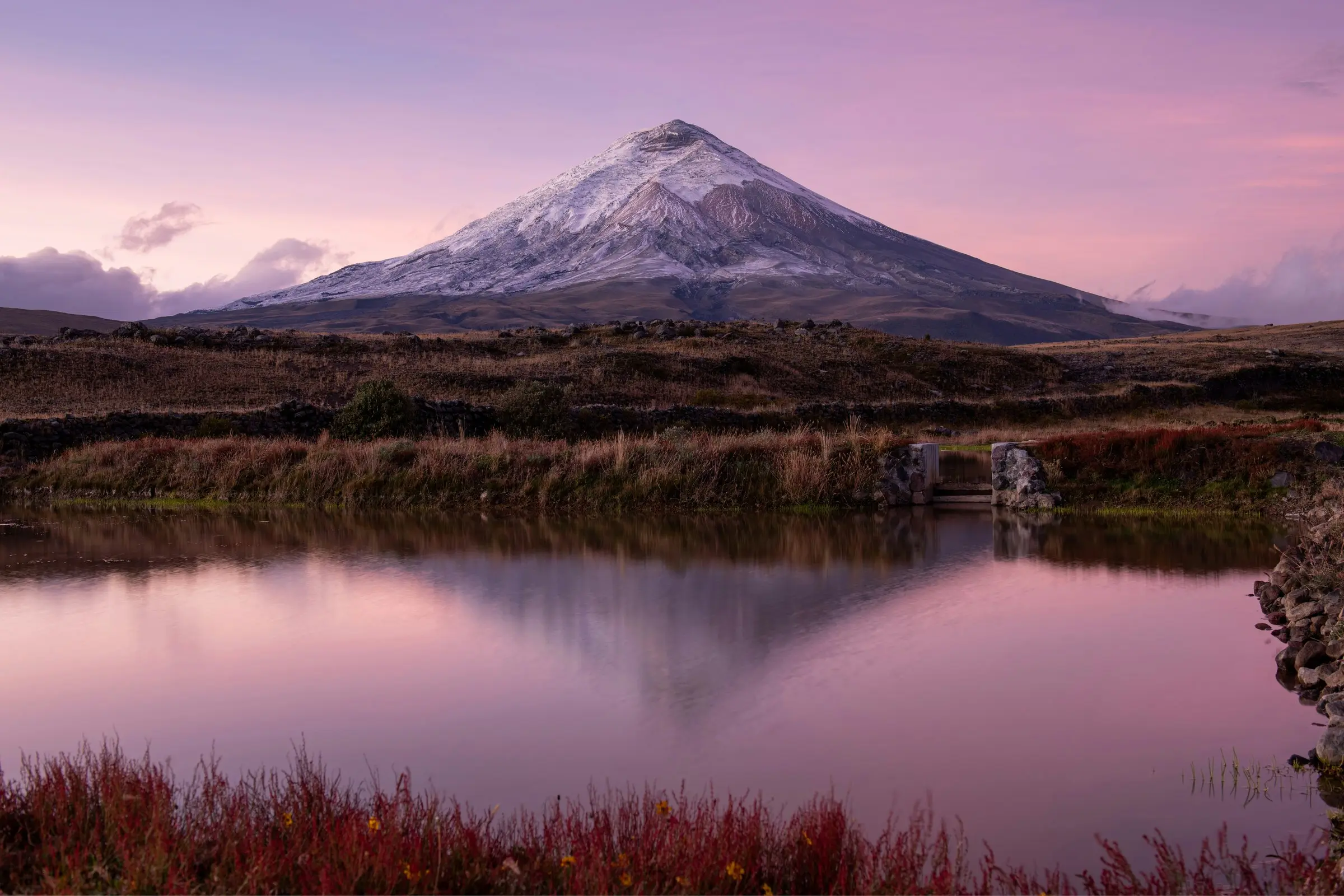
The postcard trip. About 50 km and 1.5–2 hours south, Cotopaxi is one of the world’s highest active volcanoes at 5,897 m, and the national park around it was free to enter at the time of writing (you register at the gate). The flat walk around Limpiopungo lagoon (~3,800 m) is easy and gives you the classic reflection shot; the fitter can drive to the car park at ~4,500 m and hike 45 minutes to an hour up to the José Ribas refuge at 4,864 m, which is a serious pull at that altitude. Roads inside are gravel, so a 4x4 or a tour is best. Book ahead only if you want a guided climb.
Quilotoa crater lake
A turquoise lake filling a volcanic crater, 3–3.5 hours south. The community charges about $2 to enter. From the rim at ~3,900 m you can hike down to the water in 30–45 minutes; the climb back takes 45 minutes to an hour, or a mule will carry you up for $10–15. It is a long day from Quito but a spectacular one, and it pairs well with the Quilotoa Loop villages if you have more time.
Otavalo market and around
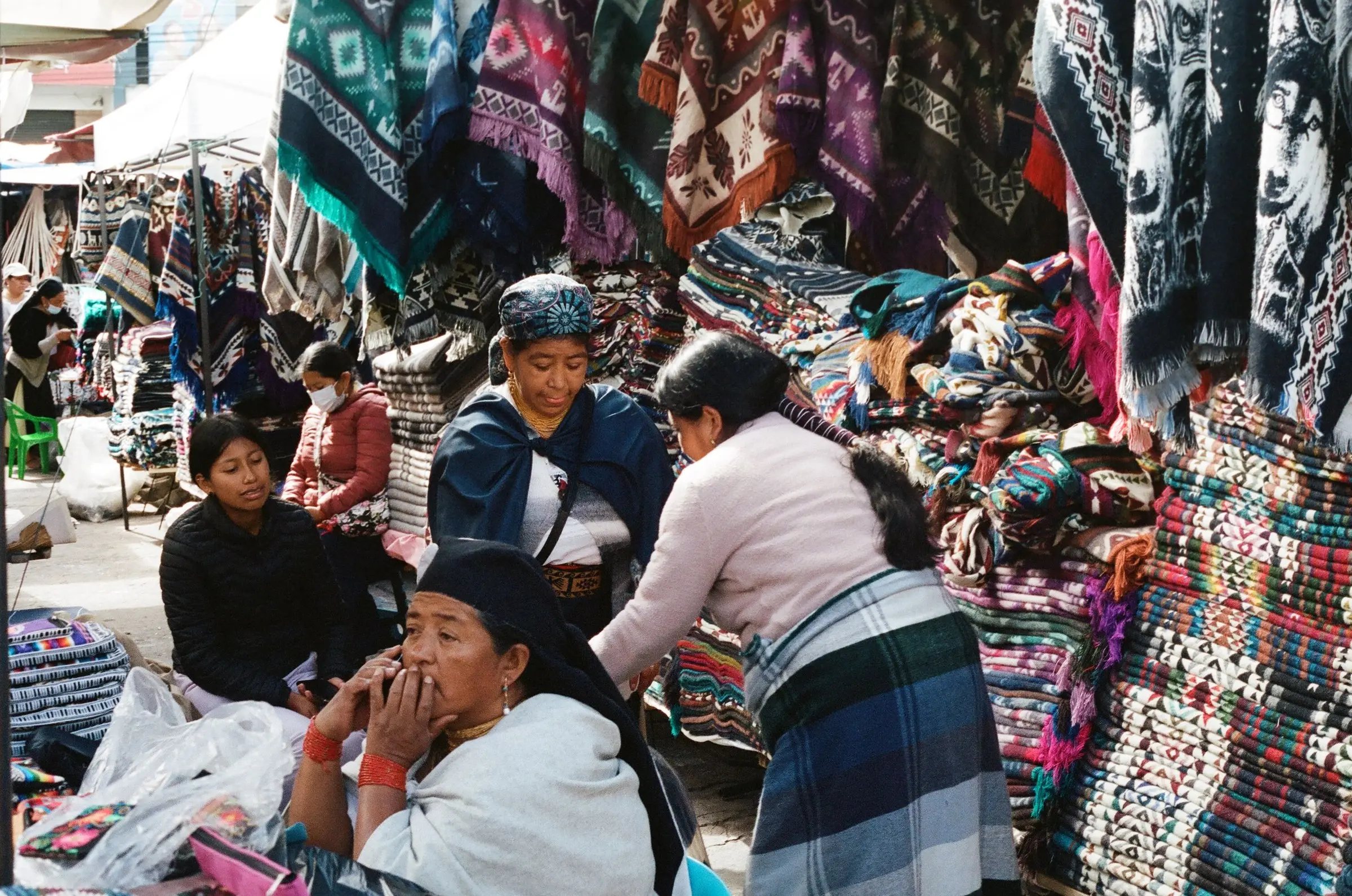
About 2 hours north, Otavalo hosts one of South America’s great indigenous markets. Saturday is the big day, when the Plaza de Ponchos overflows with textiles, though a smaller version runs midweek too. Close by you can add the Peguche waterfall, the leather town of Cotacachi, and the beautiful Cuicocha crater lake with its short boat rides. No booking needed; just go early to beat the tour buses.
Mindo cloud forest
A complete change of climate: 2–2.5 hours north-west and a long descent into humid green cloud forest. Mindo is Ecuador’s birding capital (hundreds of species, hummingbird feeders buzzing at every café) and an easy adventure day: a chocolate-farm tour (~$10), the tarabita cable car to the Nambillo waterfalls (~$5 return), river tubing (~$8), ziplines, a butterfly farm and orchid gardens. Full-day tours from Quito start around $90; self-driving is simple once you accept the winding road.
Papallacta hot springs
The easiest reset of them all: 1.5–2 hours east on a good paved road, over the pass and down to a valley of thermal pools at ~3,300 m. The public baths at Termas de Papallacta cost about $9, or roughly $22 for the quieter spa pools. No booking needed, though a weekend can be busy. On a clear day the drive over the pass has Antisana looming to the south.
Mitad del Mundo and Pululahua
The equator, and the closest trip of all at 45 minutes to an hour north. The Mitad del Mundo monument complex charges around $5, and the interactive Museo Intiñán a couple of hundred meters away (another ~$5) does the fun equator demonstrations. Combine it with the Pululahua crater a little further on, one of the few inhabited volcanic craters in the world; go before noon, because cloud fills it by midday. Together they make a relaxed half-day.
Antisana Ecological Reserve
For wildlife and wide, empty high country, Antisana is about 2 hours south-east. The páramo here is one of the most reliable places near Quito to see Andean condors, often from the Isco lookout or the Tambo Condor viewpoint. The gate closes to new entries around 2 p.m., so start early, and a high-clearance vehicle helps on the approach.
Baños de Agua Santa (the long one)
Baños is 3–3.5 hours south and really deserves an overnight, but determined day-trippers do it. It is Ecuador’s adventure hub: the Ruta de las Cascadas with dozens of waterfalls including the thundering Pailón del Diablo, the famous “swing at the end of the world” at Casa del Árbol, plus rafting, canyoning and biking. Individual sites cost only a dollar or two. Go with realistic expectations of a 12-hour round trip, or better, tack on a night.
Bonus: the TelefériQo, no car required
Not a day trip so much as a half-day in the city: Quito’s own cable car climbs from ~3,100 m to the Cruz Loma station at ~4,050 m in 18 minutes, and the panorama over the city and the volcanoes is the best cheap thrill in town (about $9 for a round trip). From San Juan it is a 15-minute, $3–4 taxi. If you plan to hike from the top or use it to acclimatize before bigger peaks, our Quito altitude guide covers the timing and the Rucu Pichincha trail.
You do not need a whole day out of town for a big view either. Our Quito viewpoints guide compares El Panecillo, the giant letters at Itchimbía, the TelefériQo and the Mirador de Guápulo, most of them a short walk or a cheap taxi from the apartment.
Heading to the islands as well? See the Galápagos stopover guide. And when you are ready to book the base for all of it, the apartment is right here in San Juan.
Frequently asked questions
What are the best day trips from Quito?
The classics are Cotopaxi National Park (about 1.5–2 hours) for volcano scenery, the Otavalo Saturday market (about 2 hours), Mindo cloud forest (2–2.5 hours) for birds and chocolate, Papallacta hot springs (1.5–2 hours), the Quilotoa crater lake (3–3.5 hours) and Mitad del Mundo, the equator monument, which is only 45 minutes away and works as a half-day.
Do I need a car for day trips from Quito?
No, organized tours run to all the popular spots, but a rental car gives you freedom and early starts, which matter at places like Antisana and Pululahua that cloud over by midday. If you self-drive, an SUV is worth it for the gravel roads inside Cotopaxi and around Quilotoa. We no longer offer parking at the apartment, so plan where the car will sit between trips.
How far is Cotopaxi from Quito?
Cotopaxi National Park is about 50 km south of Quito, roughly a 1.5–2 hour drive via the E35 Panamericana. Park entry was free at the time of writing (register at the gate); inside, the roads are gravel and better suited to a 4x4.
Can you visit Quilotoa as a day trip from Quito?
Yes. The Quilotoa crater lake is about 3–3.5 hours each way, so it makes a long but rewarding day. The rim sits at around 3,900 m; the hike down to the water takes 30–45 minutes and the climb back 45 minutes to an hour, or you can hire a mule.
Is it better to take a tour or drive yourself?
Tours are simpler, include a guide and remove the stress of mountain roads. Self-driving is cheaper for a group and far more flexible. For interiors like Cotopaxi, Quilotoa and Antisana, choose a high-clearance vehicle and start early.