
The short version: Quito’s four famous lookouts are all close to our apartment in San Juan. Parque Itchimbía and its giant letters are free, a 30 to 40 minute walk or a 5 to 10 minute taxi away. El Panecillo is a 10 to 15 minute taxi for $3 to $5; ride to the top, never take the stairs. The TelefériQo base station is 12 to 20 minutes and $3 to $4 by taxi, then about $9 for the cable car. The Mirador de Guápulo is the far one at 15 to 25 minutes by taxi. Whichever you pick, go in the morning: the sky over Quito is clearest before noon, and clouds roll in after lunch.
We live on this hillside, so these lookouts are where we take our own visitors. Below is how we actually do each one: where walking makes sense, where it does not, what you pay, and when the view repays the trip. If you count the climbable towers of the Basílica, a few minutes downhill from our door, you even have a fifth; that one lives in our San Juan guide. Prices here are approximate, checked in mid-2026; confirm locally before you set out.
| Viewpoint | Getting there from our door | Cost | Best time |
|---|---|---|---|
| El Panecillo | Taxi only, 10 to 15 min, $3 to $5 | $1 monument entry, hilltop free | Morning; Thu to Sun the monument stays open to 9 p.m. |
| Parque Itchimbía | Walk 30 to 40 min, or taxi 5 to 10 min | Free | Morning |
| TelefériQo | Taxi 12 to 20 min, $3 to $4 | About $9 round trip for foreign visitors | Weekday morning; last ticket 5:30 p.m. |
| Mirador de Guápulo | Taxi 15 to 25 min, $3 to $5 | Free | Clear mornings |
Three of the four are about 15 minutes from our door on a normal day; Guápulo can take 25 when traffic is against you. In a straight line, El Panecillo and Itchimbía are both about 1.9 km away, the TelefériQo base station about 2.4 km, and the Guápulo mirador about 4 km.
El Panecillo: the winged Virgin above the Old Town
Take a taxi to the top: $3 to $5 from our door, 10 to 15 minutes through Old Town traffic, and entry to the monument is $1 once you are up there. The hill you see from every plaza in the center carries the Virgen de Quito, a winged Madonna about 40 m tall, assembled from thousands of aluminum pieces and inaugurated in 1975. You can go inside her: the base holds a small museum on how the statue was built, and above it a 360-degree platform looks straight down onto the Old Town roofs, with the modern city stretching away north and south. The plaza around the monument is free, and souvenir and snack stands wait at the top. The monument opens Monday to Wednesday from 9 a.m. to 5 p.m., and Thursday to Sunday from 9 a.m. to 9 p.m., which late in the week turns it into the one place to see the city lit up.
Do not walk up. The hill is only about 1.9 km from our door, but the footpath and stairs have a documented history of muggings, and the street dogs on that slope are not the friendly kind. Every Quiteño will tell you the same thing we do: ride up, even when the distance looks like a stroll. During the day the summit itself is fine, with police on site and plenty of visitors. Ask your driver to wait if you only want photos, or order the return car while you still have signal and battery. After dark, travel both ways by car, no exceptions.
Parque Itchimbía: the giant letters and a free 360
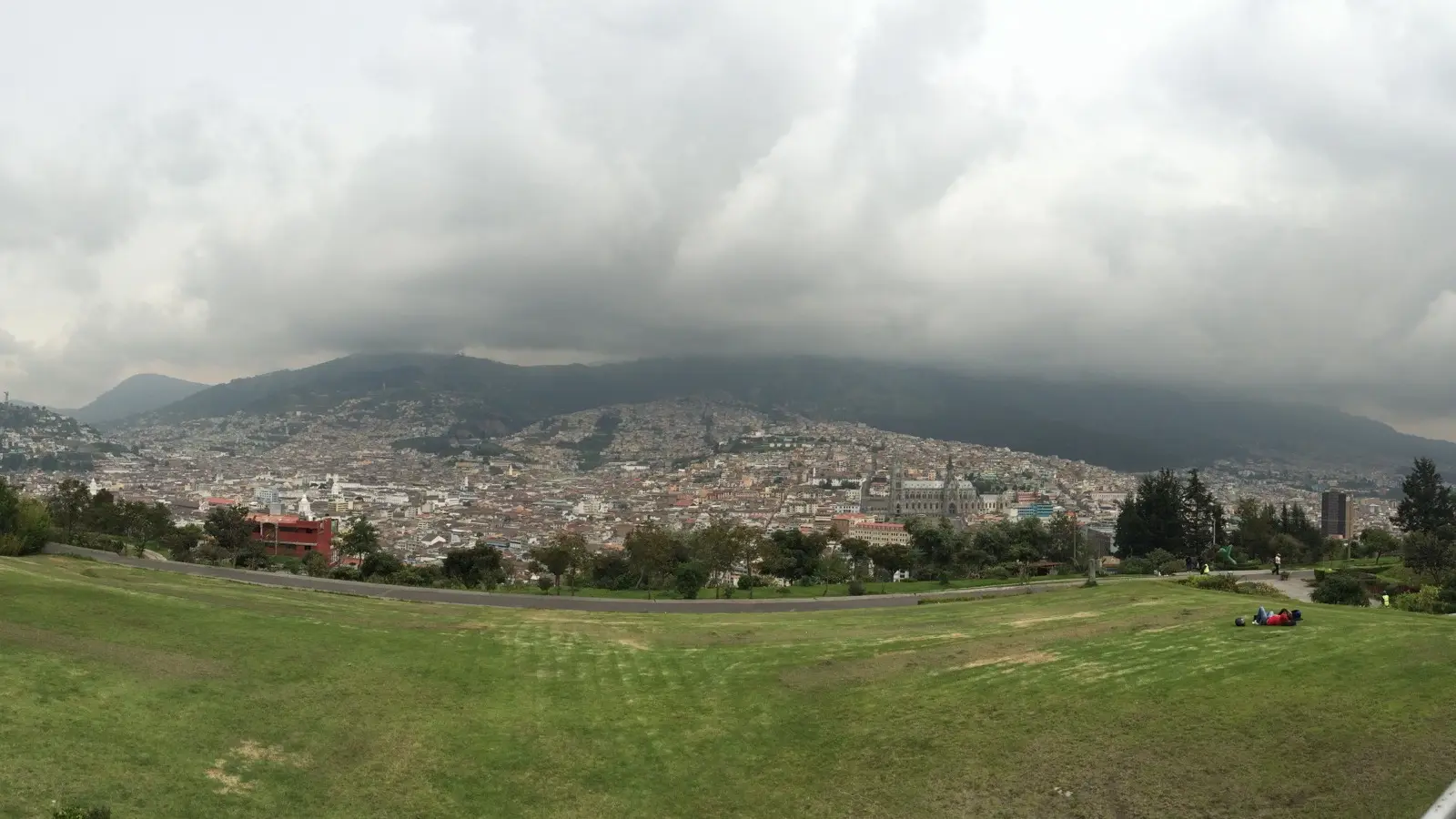
Itchimbía costs nothing and is the one lookout here you can walk to: about 2 km from our door, 30 to 40 minutes on foot or a 5 to 10 minute taxi. The park covers 54 hectares on a hill about 100 m above the surrounding city; you only pay if you bring a car. The draw is the open 360-degree view: the Old Town and El Panecillo on one side, the newer city and, on clear days, the volcanoes on the other. The giant letters near the mirador are the most photographed spot in the park; stand behind them and the historic center becomes your backdrop. In the middle sits the Palacio de Cristal, a glass and steel hall that works as a cultural center, open Monday to Friday 9 a.m. to 5 p.m. and weekends 10 a.m. to 6 p.m., with exhibitions that are often free.
On foot, budget the full 40 minutes: the final stretch climbs the hill and you are walking at 2,850 m. A taxi does it in 5 to 10 minutes for a couple of dollars, and that is our standing advice for the way back at least. The gates open around 5 a.m. and close around 6 p.m., sometimes 7 depending on whom you ask, so treat it as a daytime spot and go in the morning when the air is clearest. On weekends you will share the lawns with picnicking families and joggers, which is half the charm.
The TelefériQo: up to 4,050 m in 18 minutes
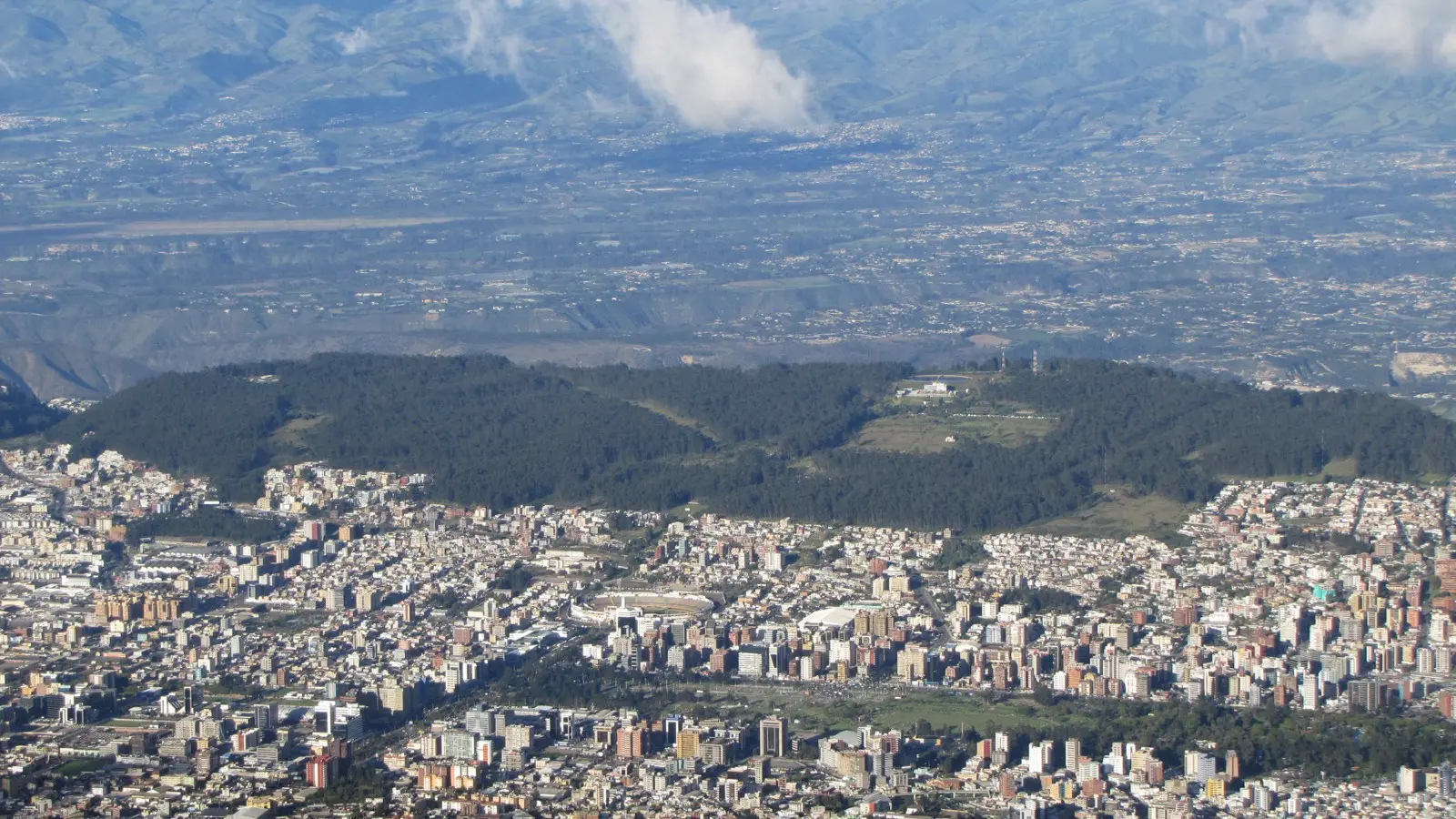
Taxi to the base station, 12 to 20 minutes from our door and $3 to $4, then about $9 round trip for the cable car; the last ticket of the day is sold at 5:30 p.m. Eighteen minutes in a cabin take you from about 3,100 m to Cruz Loma at about 4,050 m, and nothing else on this page comes close to that panorama. Under 18s and holders of an Ecuadorian cédula pay less than the adult visitor rate. It runs Monday to Thursday 9 a.m. to 7 p.m. and Friday to Sunday from 8 a.m.
Two practical points from living here. First, go on a weekday morning: you will more or less walk onto a cabin, while weekend afternoons mean queues of 30 minutes and more. Second, do not ride it on your arrival day; the top station is about 1,200 m above the city, and your body wants a day or two in Quito first. Our altitude guide covers acclimatization and the Rucu Pichincha trail that starts at the top. The famous swing, the columpio, waits about 500 m from the station for a small extra fee. If you are planning full days out of the city, our day trips guide shows where the TelefériQo fits between Otavalo and Cotopaxi.
Mirador de Guápulo: the view away from the city
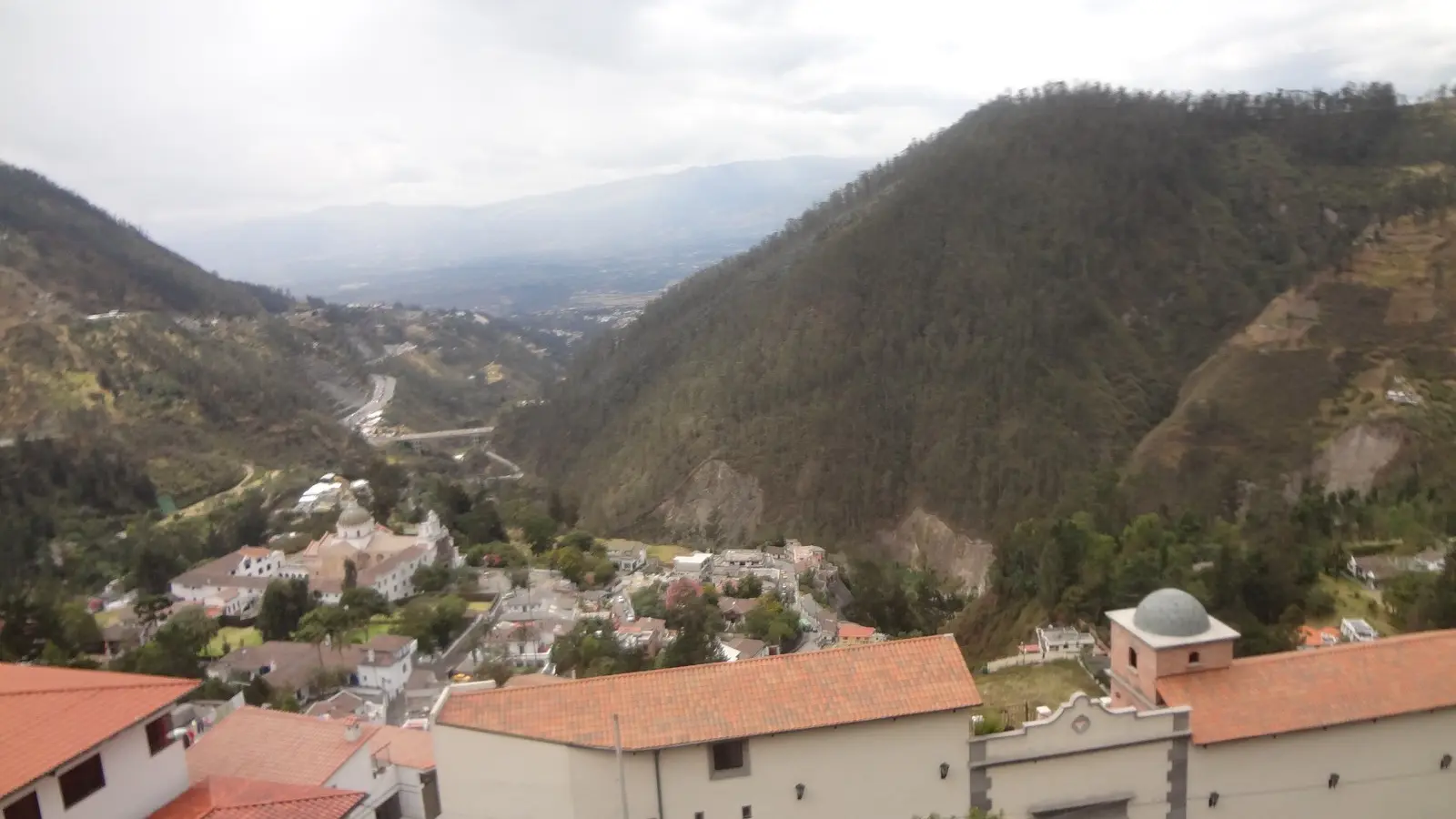
Taxi only: 15 to 25 minutes from our door, around $3 to $5, and the mirador itself is free with no opening hours to plan around. The other three lookouts show you Quito; this one shows you what lies behind it. The Mirador de Guápulo sits on Avenida González Suárez near the Hotel Quito, marked by a monument to Francisco de Orellana, whose expedition toward the Amazon set off down this very slope. You look down onto the colonial village of Guápulo with its 17th-century church, the Santuario de Guápulo, and out across the Cumbayá valley; on a clear day the snow of Cayambe sits on the horizon.
It is about 4 km from the apartment in a straight line and noticeably more by road, so walking is not realistic; Uber or InDrive usually come in at the cheaper end of the fare. If you want to continue down the steep lane called Camino de Orellana to the church, do it in daylight and ideally not alone; the village below rewards the detour, but this corner of the city is best treated as a daytime visit.
When to go: clear mornings, cloudy afternoons
Quito’s weather runs on a daily rhythm you can plan around. Mornings, roughly 6 a.m. to noon, give the clearest air. Clouds usually build over the ridges from about 1 to 2 p.m., and showers are most common between 2 and 5 p.m. If a view matters to you, do it before lunch; that applies double to the TelefériQo, where a clouded-in Cruz Loma shows you the inside of a cloud for $9. Season matters too. June to September is the dry season and the most reliable window for long volcano views, while October to May usually means clear mornings and wet afternoons, with March and April the wettest. Days sit around 21 °C all year, but pack a warm layer for the top stations.
Altitude is part of the timing as well. Quito lies at about 2,850 m and the TelefériQo tops out around 4,000 m, so put Itchimbía or El Panecillo on day one or two and save the cable car for later in your stay; our altitude guide has a day-by-day plan. And if you want the city at night, the version we recommend is El Panecillo on a Thursday to Sunday evening, when the monument stays open to 9 p.m., reached by taxi in both directions.
Safety, in one place
The rules we give our own guests, condensed:
- Never walk up El Panecillo. Taxi both ways, $3 to $5; the top is fine by day.
- Itchimbía is the walkable one. The route from San Juan is a normal city walk in daylight; take a taxi back if the climb was enough exercise for one day.
- The TelefériQo is the easy one. It is a staffed attraction with set hours; what needs planning up top is weather and thin air, not crime.
- Guápulo in daylight. The mirador itself is unproblematic by day; walk the steep lane down to the church in company and before dark.
- Keep the phone in your pocket between photos. Busy viewpoints attract pickpockets the same way busy plazas do.
For the wider picture on the neighborhood, day versus night, taxis and apps, our San Juan local guide has the full section.
The practical advantage of sleeping in San Juan is the morning head start: when you wake to a clear sky at 7 a.m., Itchimbía is a short walk and El Panecillo a 10 to 15 minute taxi, while visitors staying in the north are still crossing the city. The apartment is rented long-term now, from $90 nights at $500 a month; if you are in Quito for a season you can check availability on the availability page, and if you cannot decide which lookout fits your day, message us on WhatsApp and we will look at the sky with you.
Frequently asked questions
Is it safe to walk up El Panecillo?
No. The footpath and stairs up the hill have a documented history of muggings, so take a taxi or an Uber to the top for $3 to $5, about 10 to 15 minutes from our neighborhood. The summit itself is fine during the day, with police on site and plenty of visitors. After dark, go up and come back down by car only.
How much does the TelefériQo in Quito cost?
A round trip costs about $9 for adult foreign visitors; under 18s and holders of an Ecuadorian cédula pay less. It runs 9 a.m. to 7 p.m. Monday to Thursday and from 8 a.m. Friday to Sunday, but the last ticket is sold at 5:30 p.m. From our apartment the taxi to the base station takes 12 to 20 minutes and costs $3 to $4.
Is Itchimbía Park free?
Yes. The park costs nothing to enter and is open daily from about 5 a.m. to around 6 p.m.; you only pay if you bring a car. The giant letters and the 360-degree lookout are free, and exhibitions in the Palacio de Cristal are often free as well.
What time of day has the clearest views in Quito?
Morning, roughly 6 a.m. to noon. Clouds usually build over the city from about 1 to 2 p.m., and showers are most common between 2 and 5 p.m. If a view matters to you, do it before lunch; that applies double to the TelefériQo.
How do you get to the Guápulo viewpoint?
Take a taxi or an Uber. The mirador sits on Avenida González Suárez, about 4 km from our apartment in a straight line and more by road, which works out to 15 to 25 minutes and $3 to $5 depending on traffic. Walking there is not practical, and the steep lane down to the church is best done in daylight and not alone.
Which Quito viewpoints can you reach on foot?
Parque Itchimbía is the walkable one: about 2 km from our apartment in San Juan, 30 to 40 minutes with the climb at the end, or a 5 to 10 minute taxi. Never walk up El Panecillo; the path has a documented history of muggings, so ride up for $3 to $5. The TelefériQo and Guápulo are taxi trips too, roughly $3 to $5 each, the TelefériQo usually $3 to $4.